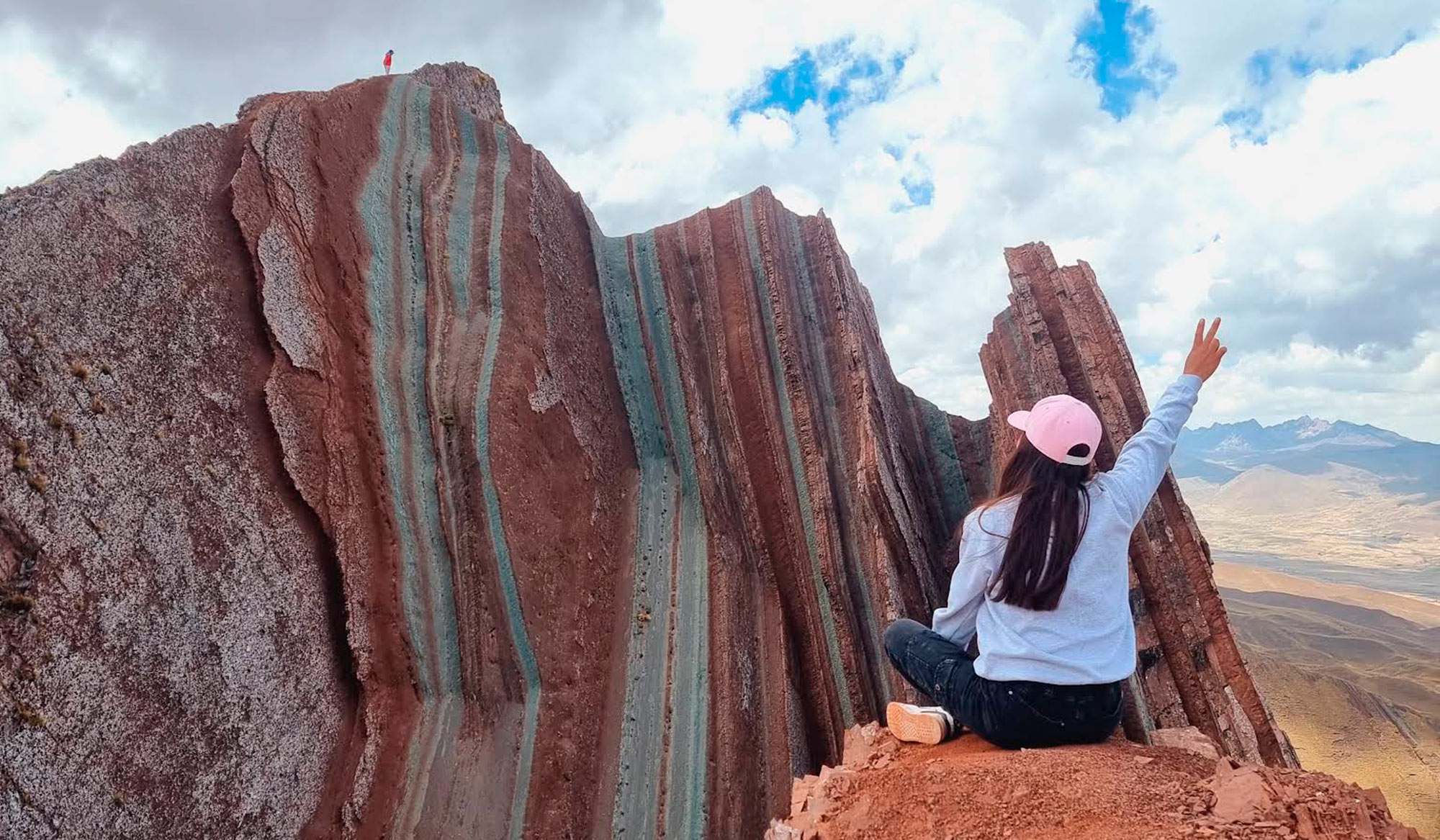
Pallay Punchu Mountain is one of Cusco’s natural attractions, known for its colorful stripes and distinctive pointed ridges, which resemble an Andean poncho. Located in the province of Canas, at nearly 4,800 meters above sea level, it forms part of a high-Andean landscape surrounded by lagoons, mountains, and grasslands. In this guide, you’ll find information on how to get there from Cusco, the hike, its difficulty level, the best time to visit, and essential tips to make the most of the experience.
Contents
- Where is Pallay Punchu?
- How to get to Pallay Punchu from Cusco?
- Pallay Punchu: elevation and hiking difficulty
- How long is the hike to Pallay Punchu?
- What is the best time to visit Pallay Punchu?
- What to see at Pallay Punchu Mountain?
- What to bring to Pallay Punchu?
- Tips for visiting Pallay Punchu
- Can you visit Pallay Punchu on your own?
- Pallay Punchu vs. Vinicunca and Palccoyo
- Frequently asked questions about Pallay Punchu
Where is Pallay Punchu?
Pallay Punchu is located in the province of Canas, in the Cusco region, around the district of Layo and nearby communities. The mountain reaches nearly 4,800 meters above sea level, so cold temperatures, strong winds, and high altitude are important factors to consider during your visit.
From certain points on the mountain, you can see Langui-Layo Lake, as well as other mountains and snow-capped peaks in the highland provinces of Cusco. Since Pallay Punchu is relatively far from the city of Cusco, visits are usually organized as full-day excursions.
How high is Pallay Punchu?
The elevation of Pallay Punchu varies depending on the point considered, with official Mincetur records indicating approximately 4,791 and 4,850 meters above sea level. For travelers, it is therefore more practical to consider an elevation of around 4,800 meters above sea level, which can make the hike challenging even for people who are accustomed to physical activity.
How to get to Pallay Punchu from Cusco?
To get to Pallay Punchu from Cusco, you need to travel south through the region, passing through the Sicuani area and continuing toward Layo and the communities near the mountain.
A general route can be summarized as follows:
Cusco → Sicuani → Layo → Pallay Punchu
From Cusco, the route to Pallay Punchu first passes through Sicuani and continues toward Layo, before reaching the point where the hike begins. The final section may vary depending on the route and the exact starting point, so the distance and duration of the hike are not the same for every excursion.
Can you drive all the way to the mountain?
Vehicles can reach certain access points, but the final stretch to Pallay Punchu must be completed on foot. The distance can vary considerably depending on where you leave the vehicle; some tour routes involve a short hike to the viewpoints, while others may require a longer trek. It is therefore advisable to confirm the exact starting point of the hike in advance.
Pallay Punchu: elevation and hiking difficulty
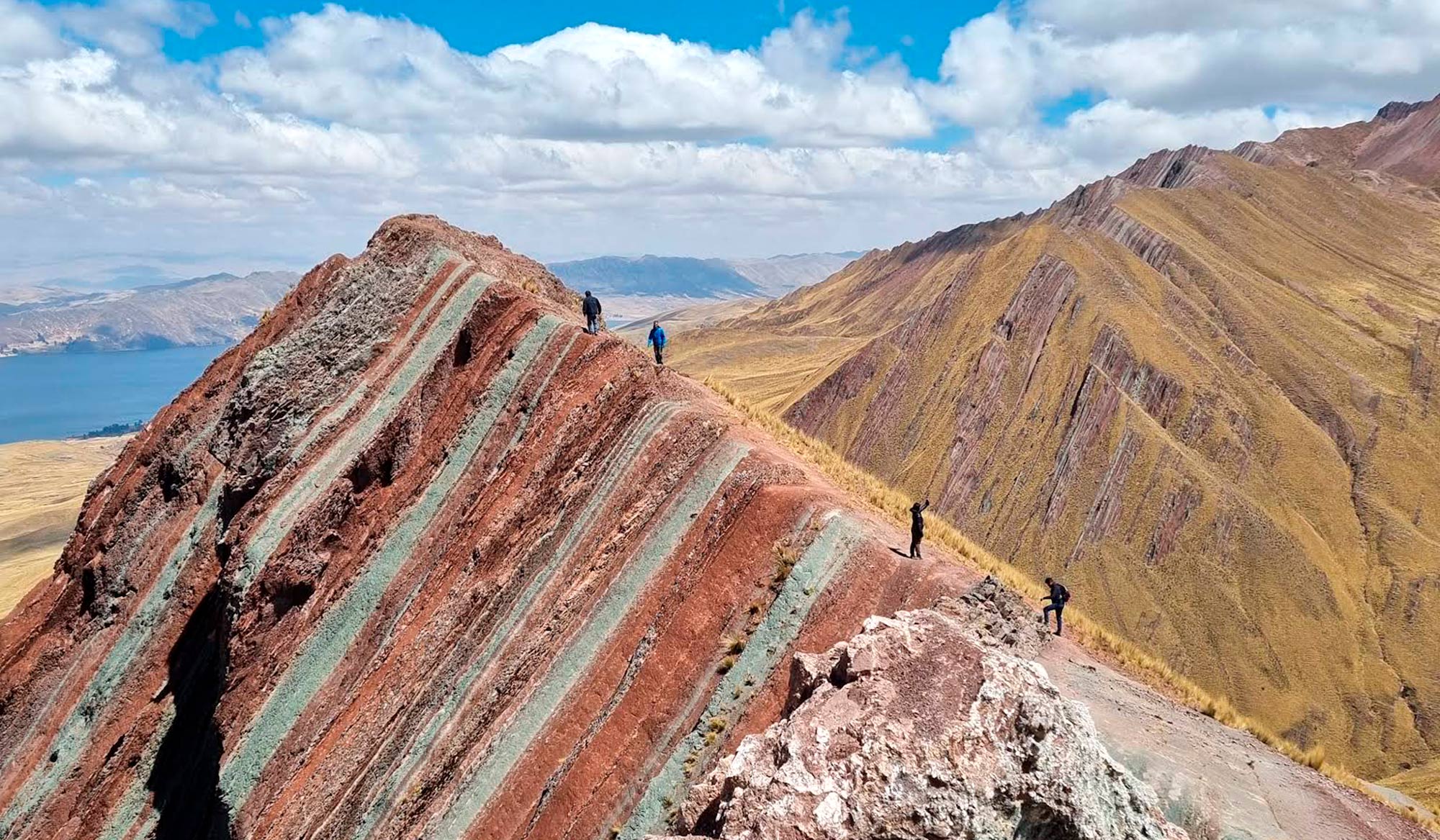
Altitude is the main factor that determines the difficulty of Pallay Punchu. Although the route does not require technical mountaineering skills, walking at nearly 4,800 meters above sea level can make what seems like a short hike physically demanding.
The difficulty also depends on:
- Altitude.
- Trail steepness.
- The starting point of the hike.
- Weather conditions.
- The traveler’s physical condition.
- Prior acclimatization time.
For these reasons, Pallay Punchu can be considered a moderate to challenging hike, especially for people who are not accustomed to activities at high altitude.
Is acclimatization necessary before hiking?
Yes. Acclimatization is especially important due to the high elevation of Pallay Punchu. If you have recently arrived in Cusco from a lower-altitude area, it is advisable to allow time to acclimatize before undertaking a hike at nearly 4,800 meters, maintain a steady pace during the ascent, and pay attention to how your body responds, avoiding overexertion if significant altitude-related symptoms appear.
How long is the hike to Pallay Punchu?
There is no single hiking time that applies to all visitors, as the duration depends on the starting point of the route. Some tour routes estimate 45 minutes to an hour to reach the viewpoint, while other itineraries can be considerably longer, so it is important to verify the exact starting point before using a specific duration as a reference.
You should also distinguish between:
- Hiking time to reach the viewpoint.
- Time spent on the mountain.
- Descent time.
- Total transportation time from Cusco.
The full excursion from Cusco usually takes practically the entire day due to the distance between the city and this area of the highland provinces.
What is the best time to visit Pallay Punchu?
The dry season, roughly from April to October, generally offers more favorable conditions for visiting Pallay Punchu, with less frequent rainfall and a greater chance of clear skies to appreciate the mountain’s colors and surrounding landscape. However, high-altitude weather can change quickly even during these months, with very cold mornings and the possibility of strong winds, cloud cover, or rain throughout the day.
Pallay Punchu during the rainy season
Between November and March, rainfall becomes more frequent in the region, which can affect trail conditions and reduce mountain visibility, as well as bring periods of fog, hail, or snow at higher elevations. Although it is possible to visit Pallay Punchu during these months, conditions can be less predictable, so the dry season generally offers better chances of finding dry trails and good visibility.
What to see at Pallay Punchu Mountain?
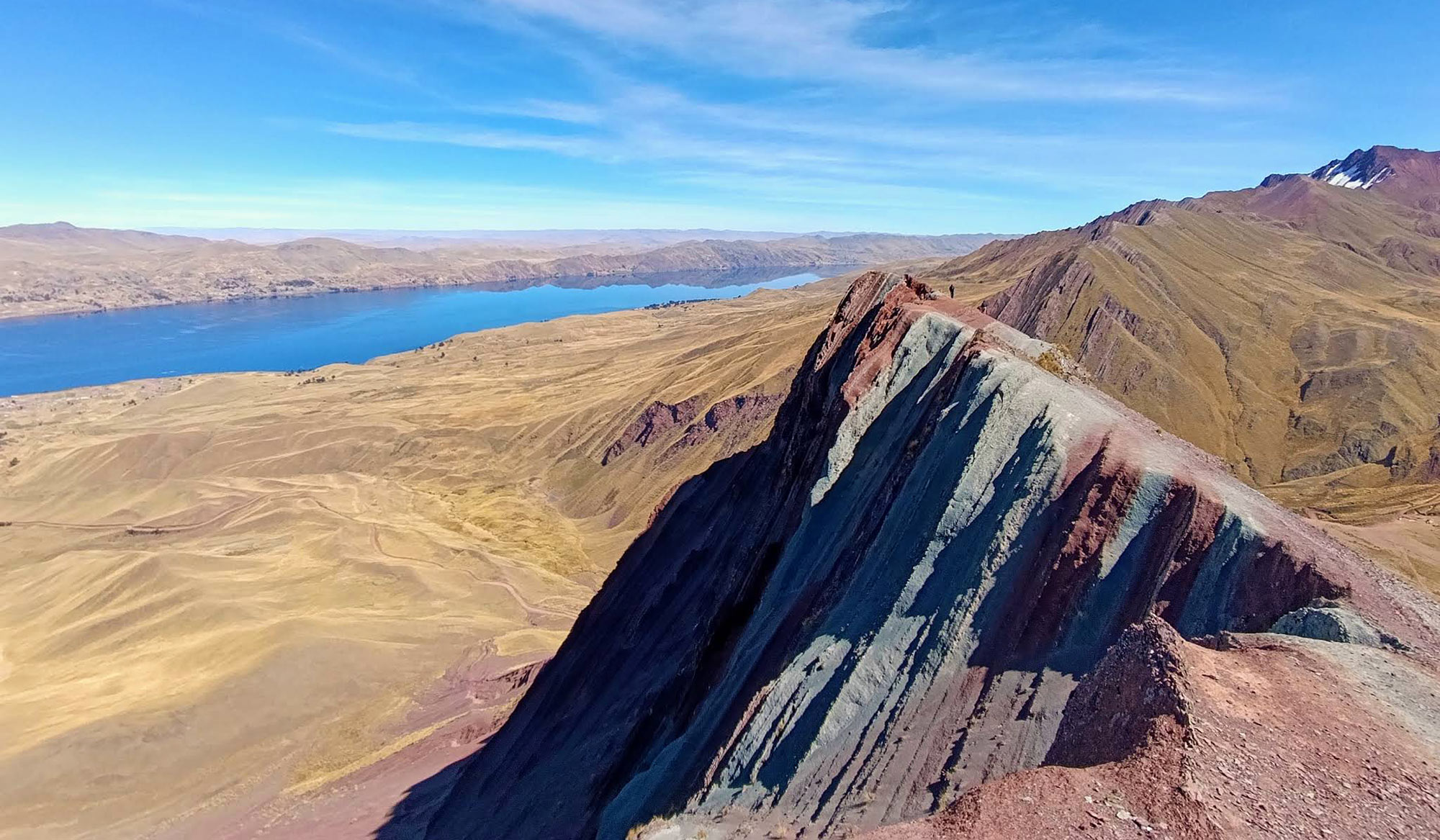
The mountain is the main attraction, but the route offers much more to see than its famous colorful stripes.
- Pallay Punchu’s ridges: one of the features that sets Pallay Punchu apart is the pointed shape of its ridges, which create a distinctive silhouette and give the mountain its characteristic sharp-edged appearance.
- The colorful stripes: the different geological layers create a range of colors, including reddish, brown, and green tones, among others. Their appearance can vary depending on the lighting, cloud cover, and terrain conditions.
- Langui-Layo Lake: the lake is part of the landscape surrounding Pallay Punchu and can be seen during the visit. Together with the mountains and puna landscape, it creates one of the most representative views of this part of Cusco.
- High-Andean flora and fauna: during the hike, you may spot animals native to high-altitude areas, especially llamas and alpacas, as well as various bird species and puna plants documented by Mincetur in the area surrounding the mountain.
What to bring to Pallay Punchu?
Due to the high altitude and changing weather conditions, it is important to bring appropriate clothing and accessories.
Basic recommendations:
- Warm jacket.
- Thermal clothing or several layers.
- Windbreaker jacket.
- Hat and gloves.
- Comfortable pants.
- Trekking shoes with good grip.
- Sunscreen.
- Sunglasses.
- Water.
- Snacks.
- Rain poncho or waterproof jacket.
- Cash.
- Camera or phone.
Tips for visiting Pallay Punchu
Before going on the excursion, keep the following recommendations in mind:
- Acclimatize beforehand: don’t underestimate a hike at nearly 4,800 meters above sea level. It is advisable to be properly acclimatized to the altitude beforehand.
- Walk at a steady pace: there is no need to rush. Maintaining a steady pace helps you manage your energy more effectively throughout the hike.
- Check the weather: weather conditions can change quickly in the highlands of Cusco, so it is important to check the forecast before starting the hike.
- Wear appropriate clothing: cold temperatures and strong winds can be particularly intense during the early morning hours. Wear layers that provide adequate protection from these conditions.
- Protect your skin: the sun can be strong even when temperatures are low. Use sunscreen and other protective gear to shield yourself from UV radiation.
- Bring water and light snacks: you will need to stay hydrated during the hike and have something light to eat along the way.
- Stay on the trails: stick to designated routes and avoid entering areas that are not open or authorized for visitors.
- Respect the environment: do not leave any waste behind and avoid disturbing the flora, fauna, or natural formations you encounter along the way.
Can you visit Pallay Punchu on your own?
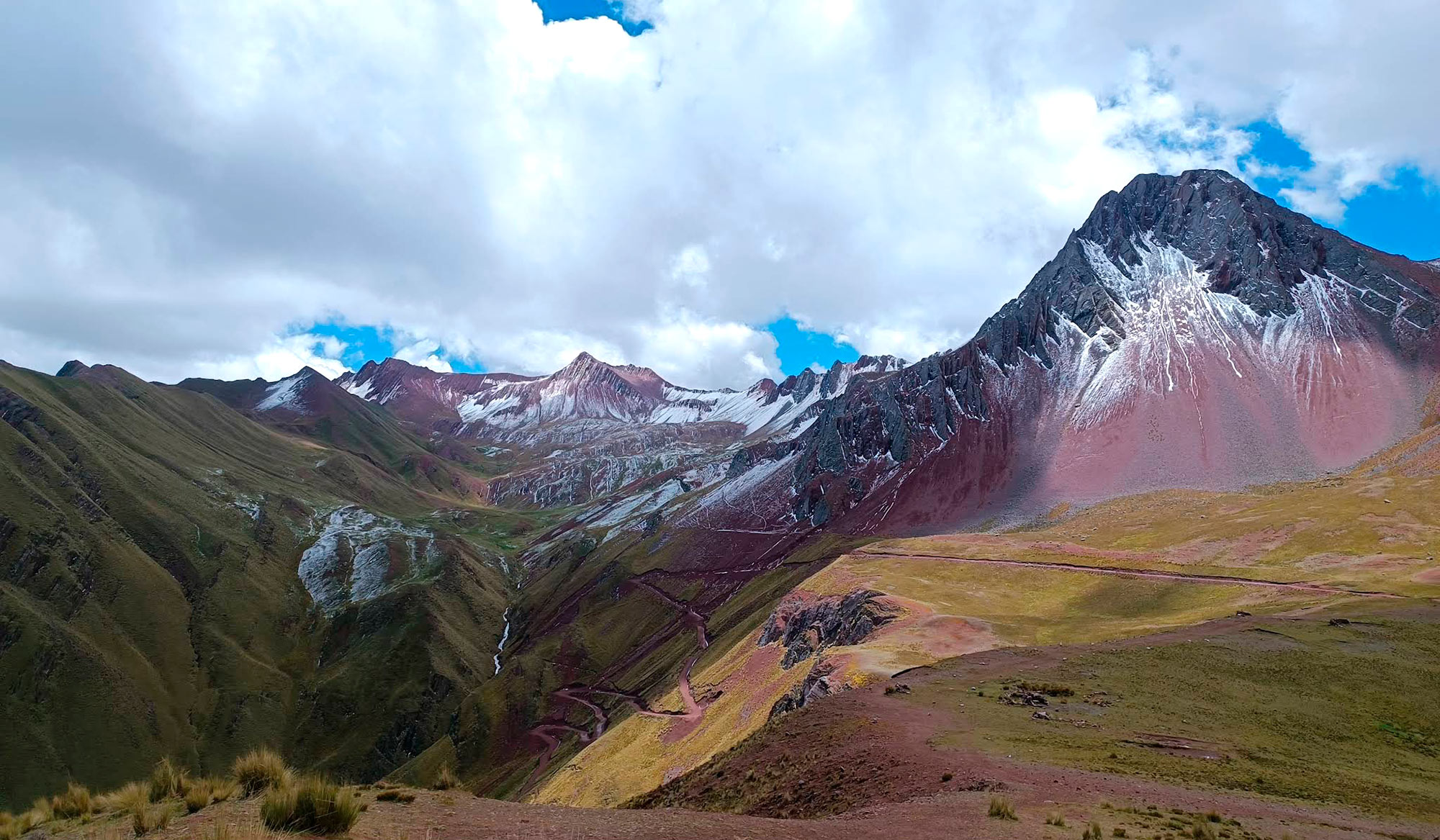
Yes, it is possible to visit Pallay Punchu independently, although it requires planning several parts of the journey. From Cusco, you can travel to Sicuani, continue to Layo, and then look for local transportation to the mountain’s access point. The main challenge is coordinating schedules, correctly identifying the starting point of the hike, and arranging your return to Cusco, keeping in mind that public transportation schedules may differ from those of an organized tour.
Visiting Pallay Punchu with a tour
An organized excursion allows the main transportation between Cusco and Pallay Punchu to be arranged as part of a single service and, depending on the operator, may include tourist transportation, a guide, meals, and other services. Before booking, it is advisable to check exactly what the tour includes, the pickup location, where the hike begins, and how much time is allocated for the visit.
Pallay Punchu vs. Vinicunca and Palccoyo
Pallay Punchu, Vinicunca, and Palccoyo are colorful mountain destinations located in the Cusco region, but each has its own distinctive characteristics.
| Pallay Punchu vs. Vinicunca and Palccoyo | |||
|---|---|---|---|
| Feature | Pallay Punchu | Vinicunca | Palccoyo |
| Main landscape | Sharp ridges and colorful stripes | Seven-colored mountain | Range of colorful mountains |
| Surroundings | High-Andean landscape and Langui-Layo Lake | Vilcanota Mountain Range | High-Andean landscape |
| Elevation | Approximately 4,800 m above sea level | High-altitude mountain | High-altitude mountain |
| Type of experience | Hiking and natural scenery | Hiking and colorful mountain | Hiking and viewpoints |
| Access | Requires travel to the highland provinces | Well-established tourist route | Well-established tourist route |
Pallay Punchu’s main visual feature is the combination of its pointed ridges and colorful stripes, along with the surrounding landscape. Choosing between this and other destinations will depend on the type of scenery you want to experience, the time you have available, the route, and the level of physical exertion you are prepared to undertake.
Questions and Answers
-
1. Where is Pallay Punchu?
Pallay Punchu is located in the province of Canas, in the Cusco region, around the district of Layo and nearby communities.
-
2. How high is Pallay Punchu?
It is located at approximately 4,800 meters above sea level. Official sources report different elevations depending on the specific record and location considered.
-
3. How do you get to Pallay Punchu from Cusco?
The general route passes through Sicuani and continues toward Layo and the mountain’s access area. The final stretch is completed on foot and may vary depending on the starting point of the hike.
-
4. How long is the hike to Pallay Punchu?
The duration depends on the route and starting point. Some hikes to the viewpoints can take around 45 minutes to an hour, while other itineraries involve longer walks.
-
5. How difficult is Pallay Punchu?
The hike can be considered moderate to challenging, mainly due to the altitude and steep sections. Physical fitness and acclimatization have a significant impact on the experience.
-
6. What is the best time to visit Pallay Punchu?
The dry season, roughly from April to October, generally offers better hiking conditions and a greater chance of clear skies.
-
7. Can you visit Pallay Punchu during the rainy season?
Yes, but conditions can be more unpredictable. Rain, cloud cover, and trail conditions may make the hike more challenging.
-
8. What should I bring to Pallay Punchu?
It is recommended to bring warm clothing, trekking shoes, sunscreen, sunglasses, water, snacks, a waterproof jacket, and accessories to protect yourself from the cold.
-
9. Is Pallay Punchu the same as Vinicunca?
No. They are different colorful mountains. Pallay Punchu is known for its pointed ridges and colorful stripes, while Vinicunca features a different geological formation and landscape.
-
10. Can you visit Pallay Punchu on your own?
Yes. You can organize the trip using public and local transportation, although you need to carefully coordinate schedules and transfers. Another option is to book an organized tour from Cusco.